

Short answer
Because Baptism cleanses from original sin, inherited from Adam, and grants sanctifying grace.
Full answer
Circumcision, in Genesis 17:12, was the sign of the Old Covenant, applied to boys on the eighth day of life. Baptism, as the new circumcision, as taught in Colossians 2:11-12, replaces this rite, allowing children to be included in the New Covenant and receive God's grace.
The Catechism of the Catholic Church (CIC 1250) teaches that children, born with fallen human nature due to original sin, need to be freed through Baptism. Although infant Baptism is not explicitly mentioned in Scripture, children are included in the salvific plan, as all need purification.
In Matthew 28:19, Jesus commands his disciples: 'Go therefore and make disciples of all nations, baptizing them...' The command given by Jesus does not exclude children. While this biblical passage does not directly reference infant Baptism, it can be understood that all nations especially include children of all ages.
In Acts 2:38-39, Peter says that the promise of Baptism is for 'you and your children.' Although there is no direct reference to infant Baptism, the mention of children indicates that the promise of salvation through Baptism includes children, opening the possibility for their Baptism.
In Acts 16:15 and Acts 16:33, we see Lydia and the jailer being baptized with 'their entire household.' The practice of baptizing entire families, though it does not specifically mention children, suggests that Baptism of members of all ages, including the youngest, was part of apostolic tradition.
In 1 Corinthians 1:16, Paul mentions that he baptized 'the household of Stephanas,' reinforcing the pattern of baptizing entire families. Although Scripture does not detail the presence of children in these events, tradition suggests that they were included in Baptism, just as they were circumcised in the Old Covenant.
Romans 5:18-19 states that original sin affects everyone, including newborns. While infant Baptism is not explicitly detailed in this text, the need for purification from original sin suggests that Baptism is also necessary for children.
In Luke 18:15-16, Jesus welcomes children and says: 'Let the children come to me, for the kingdom of God belongs to them.' While infant Baptism is not mentioned, this invitation from Jesus shows that children are worthy of receiving grace, justifying the practice of infant Baptism.
Finally, in John 3:5, Jesus teaches that 'no one can enter the kingdom of God unless they are born of water and Spirit.' This applies to everyone, including children, who also need the grace of Baptism, even though the text does not explicitly mention infant Baptism.
Testimony of the Church Fathers:
The Church Fathers support the practice of infant Baptism from the earliest centuries. Origen (c. 185-254 AD) stated that infant Baptism was a tradition received from the apostles. In his Homilies on Leviticus, he says that the Church baptizes children because, even from birth, they are stained by original sin.
Saint Irenaeus of Lyons (c. 130-202 AD), in Adversus Haereses, writes that Jesus 'came to save all people, including children, young people, and adults,' reinforcing the inclusion of children in the plan of salvation through Baptism.
Additionally, Saint Cyprian of Carthage (c. 210-258 AD) defended in a letter the Baptism of children, even before the eighth day, responding to a question raised about the practice. He reaffirms that no soul should be deprived of God's saving grace.
These testimonies show that, even without explicit mention in Scripture, the practice of infant Baptism was widely accepted and defended in Christian tradition from the earliest centuries, as part of the transmission of faith received from the apostles.
Visual aid
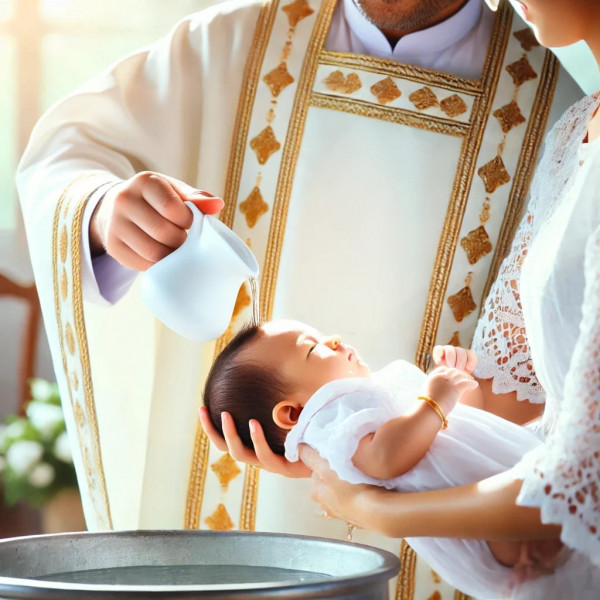
Baptism as the New Circumcision
In Colossians 2:11-12, Baptism replaces circumcision as the sign of the New Covenant. Just as in the Old Covenant, infant Baptism allows children to receive God's grace and be included in the family of faith.
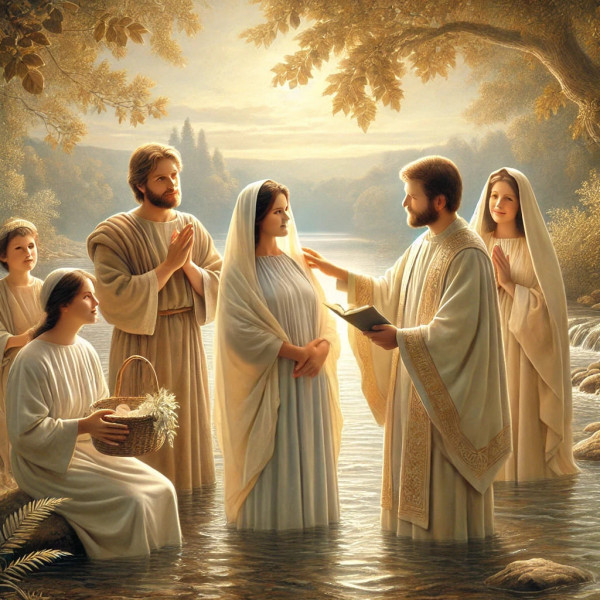
Biblical Basis and Apostolic Tradition
Acts 16:15 and 1 Corinthians 1:16 show the Baptism of 'entire households.' While Scripture does not explicitly mention children, tradition suggests they were included, as has been practiced since the earliest centuries, with support from the Church Fathers.
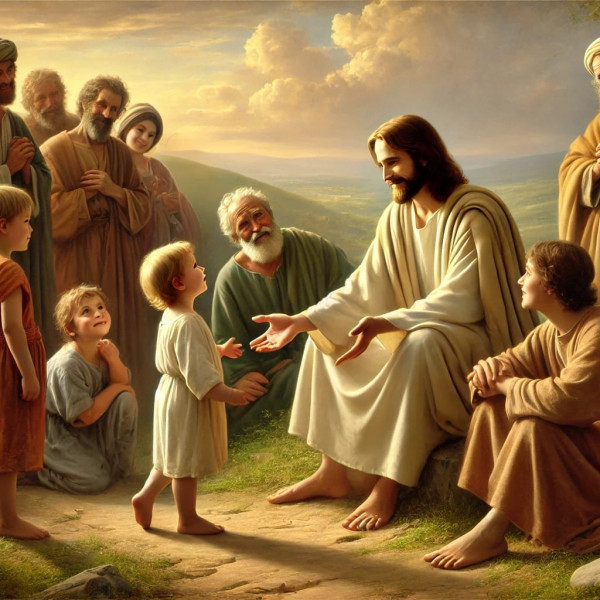
The Need for Baptism in Children
Jesus says that 'no one can enter the Kingdom of God unless they are born of water and Spirit' (John 3:5). The Church understands this applies to everyone, including children, who need the grace of Baptism to be cleansed from original sin (CIC §1250).
References
Cited sources
Related questions
Submission note to the Catholic Church
The answers here aim to clarify doubts about the Catholic faith. While every effort is made to ensure conformity with the Church's teachings, we recognize that interpretation errors can occur. If you identify any content at odds with the magisterium, please let us know — we will review and correct promptly.