

Short answer
Just as the apostles received the Spirit at Pentecost, Confirmation strengthens us for the mission.
Full answer
The sacrament of Confirmation, also known as Chrism, has strong foundations in Sacred Scripture. It is the sacrament by which a baptized believer receives the gift of the Holy Spirit more fully. This completes the grace of baptism and empowers one to be an active witness of Christ.
Several passages in the New Testament illustrate this truth. Jesus told his followers he would send the Holy Spirit to strengthen them. “But you will receive power when the Holy Spirit comes upon you, and you will be my witnesses in Jerusalem, throughout Judea and Samaria, and to the ends of the earth,” says Jesus in Acts 1:8. This verse clearly shows that the Holy Spirit is the spiritual power that enables Christians to live and proclaim the faith.
A clear example of this promise fulfilled occurs at Pentecost. As reported in the Acts of the Apostles: “All were filled with the Holy Spirit and began to speak in different tongues, as the Spirit enabled them to proclaim” (Acts 2:4). In this moment, the apostles, once timid and fearful, receive the power of the Holy Spirit and begin to preach with courage and effectiveness, prefiguring what happens in the sacrament of Confirmation.
Another significant passage that supports the sacrament of Confirmation is found in Acts 8:14-17. After hearing that the Samaritans had accepted the word of God, Peter and John are sent to lay hands on them, so they may receive the Holy Spirit. The text tells us: “Then they laid hands on them, and they received the Holy Spirit” (Acts 8:17). Here, we observe that even after being baptized, the imposition of hands was necessary for them to receive the Holy Spirit, showing the distinction between baptism and Confirmation, as the Church maintains today.
Additionally, the letter to the Hebrews mentions the “laying on of hands” as a fundamental part of Christian life: “Therefore, let us leave behind the basic teaching about Christ and advance to maturity, without laying the foundation all over again: repentance from dead works, faith in God, instruction about baptisms, and laying on of hands...” (Hebrews 6:1-2). This sacred gesture, which imparts the Holy Spirit, is still practiced today in Confirmation, continuing the apostolic tradition.
Visual aid
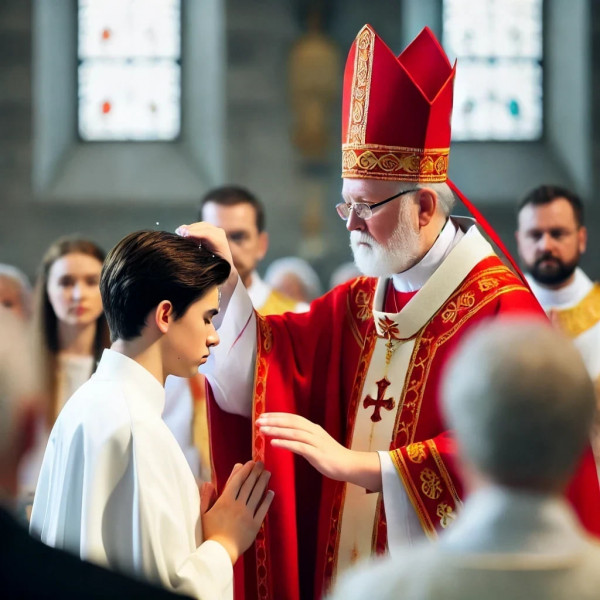
What is Confirmation?
Confirmation, or Chrism, is the sacrament that strengthens the gift of the Holy Spirit received in Baptism, enabling the believer to be an active witness of Christ and live the faith fully.
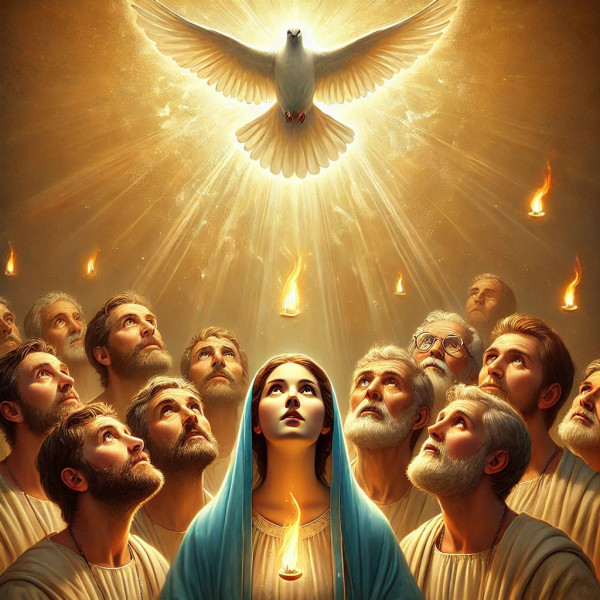
Biblical Foundations of Confirmation
In Acts 1:8, Jesus promises the Holy Spirit to strengthen his followers, which is fulfilled at Pentecost (Acts 2:4). Just as the apostles were strengthened, the sacrament of Confirmation grants us the same power to live and proclaim the faith.
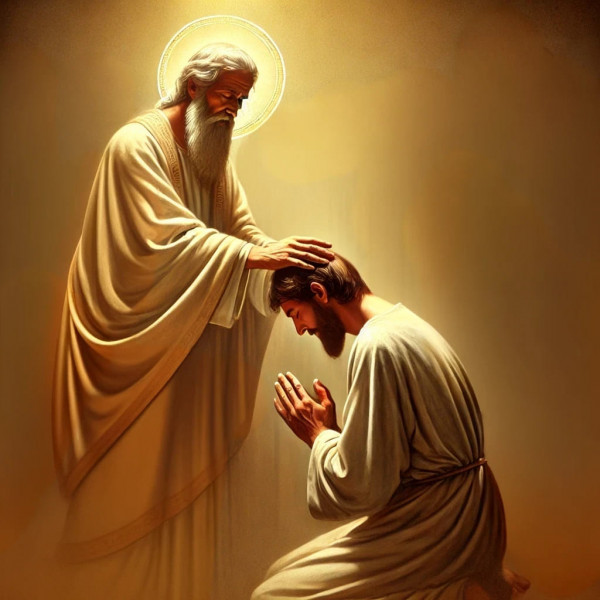
Laying on of Hands: Apostolic Tradition
In Acts 8:17 and Hebrews 6:1-2, the laying on of hands is presented as an essential gesture that imparts the Holy Spirit. This practice, continued in Confirmation, connects believers to apostolic tradition and full Christian life.
References
Cited sources
Related questions
Submission note to the Catholic Church
The answers here aim to clarify doubts about the Catholic faith. While every effort is made to ensure conformity with the Church's teachings, we recognize that interpretation errors can occur. If you identify any content at odds with the magisterium, please let us know — we will review and correct promptly.