

Kort svar
Dåben renser fra den oprindelige synd, som er arvet fra Adam, og giver den helliggørende nåde.
Fuldt svar
Circumcision, in Genesis 17:12, was the sign of the Old Covenant, applied to boys on the eighth day of life. Baptism, as the new circumcision, as taught by Colossians 2:11-12, replaces this rite, allowing children to be inserted into the New Covenant and receive God's grace.
The Catechism of the Catholic Church (CIC 1250) teaches that children, born with the fallen human nature due to original sin, need to be freed through Baptism. Although infant Baptism is not explicitly mentioned in the Scriptures, children are included in the salvific plan, as all need purification.
In Matthew 28:19, Jesus commands his disciples: "Therefore go and make disciples of all nations, baptizing them..." The order given by Jesus does not disregard children. Although this biblical passage does not directly reference infant Baptism, it can be understood that all nations especially include children of all ages.
In Acts 2:38-39, Peter says that the promise of Baptism is for "you and your children." Although there is no direct reference to the Baptism of infants, the mention of children indicates that the promise of salvation through Baptism includes them, opening the possibility of their Baptism.
In Acts 16:15 and Acts 16:33, we see Lydia and the jailer being baptized with "their whole household." The practice of baptizing the entire family, although not specifically mentioning children, suggests that Baptism of members of all ages, including the younger ones, was part of the apostolic tradition.
In 1 Corinthians 1:16, Paul mentions that he baptized "the household of Stephanas," reinforcing the pattern of baptizing entire families. Although the Scriptures do not detail the presence of children in these events, tradition suggests that they were included in Baptism, just as they were circumcised in the Old Covenant.
Romans 5:18-19 states that original sin affects all, including newborns. Although infant Baptism is not explicitly detailed in this text, the need for purification from original sin suggests that Baptism is also necessary for children.
In Luke 18:15-16, Jesus welcomes children and says, "Let the little children come to me, and do not hinder them, for the kingdom of God belongs to such as these." Although infant Baptism is not mentioned, this invitation from Jesus shows that children are worthy of receiving grace, justifying the practice of Baptism.
Finally, in John 3:5, Jesus teaches that "no one can enter the kingdom of God unless they are born of water and the Spirit." This applies to everyone, including children, who also need the grace of Baptism, even if the text does not explicitly mention infant Baptism.
Testimony of the Church Fathers:
The Church Fathers have supported the practice of infant Baptism since the early centuries. Origen (c. 185-254 AD) stated that infant Baptism was a tradition received from the apostles. In his Homilies on Leviticus, he says that the Church baptizes children because, even from birth, they are stained by original sin.
Saint Irenaeus of Lyons (c. 130-202 AD), in Adversus Haereses, writes that Jesus "came to save all men, including children, young people, and adults," reinforcing the inclusion of children in the salvation plan through Baptism.
Additionally, Saint Cyprian of Carthage (c. 210-258 AD) defended in a letter the Baptism of children, even before the eighth day, responding to a question raised about the practice. He reaffirms that no soul should be deprived of God's saving grace.
These testimonies show that, even without an explicit mention in the Scriptures, the practice of infant Baptism was widely accepted and defended in the Christian tradition from the early centuries, as part of the transmission of the faith received from the apostles.
Complemento visual
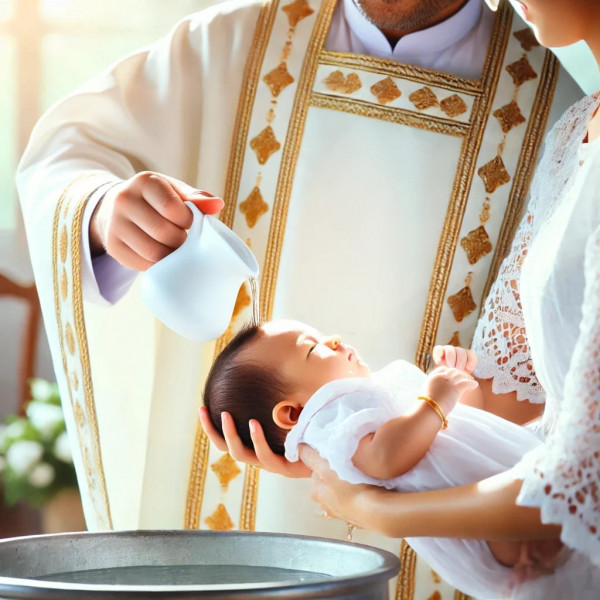
Baptismi uutena säännöksenä
Kolossealaisille 2,11-12 mukaan baptismi korvaa säännöksen uutena säännöksenä. Kuten Vanhan testamentin aikana, lasten baptismi antaa heille Jumalan armon vastaanottamisen ja sisältymisen uskon perheeseen.
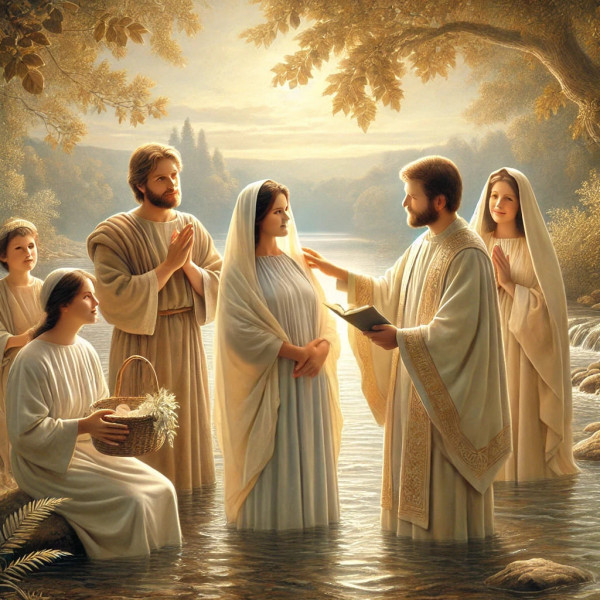
Raamatulliset perusteet ja apostolinen perinne
Toimiessakirja 16,15 ja 1. Korinttilaiskirje 1,16 osoittavat "koko perheen" baptismin. Vaikka Raamattu ei mainitse lapsia suoraan, perinne viittaa siihen, että heidät sisällytettiin ensimmäisistä vuosisadoista lähtien kirkon isien tuella.
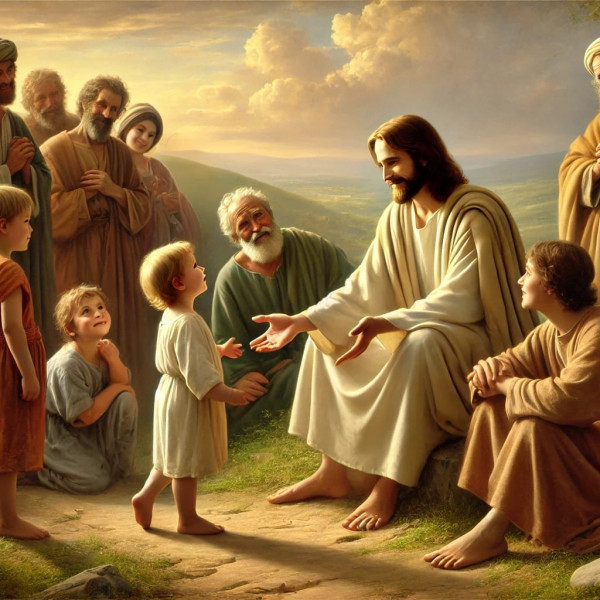
Baptismin tarve lapsille
Jeesus sanoo, että "kukaan ei voi tulla Jumalan valtakuntaan, ellei synny vedestä ja Hengestä" (Johannes 3,5). Kirkko ymmärtää tämän koskevan kaikkia, myös lapsia, jotka tarvitsevat baptismin armoa alkuperäisen synnin puhdistamiseen (CIC §1250).
Referencer
Citerede kilder
Relaterede spørgsmål
Underordningsbemærkning til Den Katolske Kirke
Svarene her sigter på at afklare tvivl om den katolske tro. Selvom enhver indsats gøres for at sikre overensstemmelse med Kirkens lære, anerkender vi, at fortolkningsfejl kan forekomme. Hvis du identificerer indhold i uoverensstemmelse med læreembedet, så lad os det vide — vi vil straks gennemgå og rette.