

Short answer
The term "father" reflects the priest's mission to guide and protect the faithful, as a father does with his children.
Full answer
The use of the term "father" to refer to priests is an expression of their spiritual fatherhood, the pastoral role they fulfill, the Church tradition, and the respect the community confers upon them. It is a way to recognize their vital role in the spiritual life of the faithful and within the Church, highlighting their responsibility to guide, teach, and sanctify. This is why the faithful call priests father, honoring the fundamental role they play in their lives.
In the Decree Presbyterorum Ordinis, established at the Second Vatican Council, it is described that presbyters (priests) must live with all, teaching and admonishing them as beloved children. This reflects the reason why the faithful call priests father, recognizing in them a spiritual authority that cares for the flock as a father cares for his children.
Saint Paul, in his letter to the community of Corinth, presents himself as a spiritual father, concerned with guiding, correcting, and loving with paternal tenderness. He sends Timothy, whom he calls "beloved son," reinforcing the concept of spiritual fatherhood, which is one of the reasons why Christians call priests father.
Although the term "father" does not appear directly in Scripture, the function of the priest, or presbyter, is clearly established. In Acts 14:23, Paul and Barnabas appoint presbyters in each community, fulfilling the role of spiritual guides. Today, as at that time, priests are chosen and ordained by a bishop, being "worthy of double honor" (1 Timothy 5:17), to lead and serve the people of God.
Visual aid
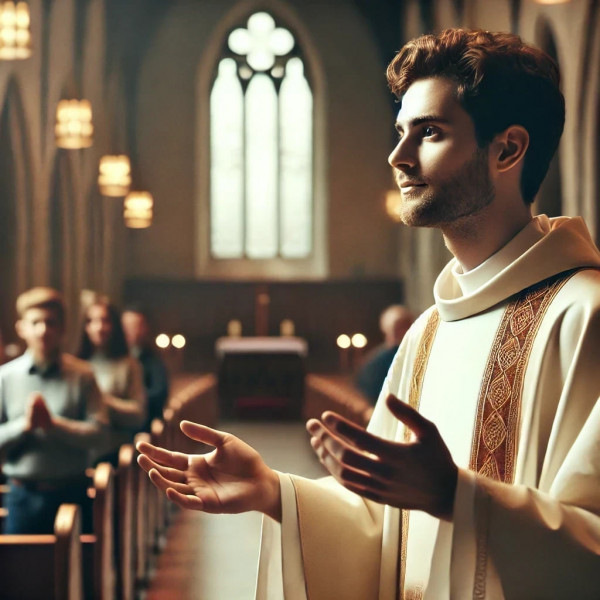
The Spiritual Fatherhood of Priests in the Catholic Church
Priests are called "fathers" as a sign of respect and recognition for their spiritual fatherhood, guiding, teaching, and caring for the faithful as a father cares for his children, as established in Church tradition.
References
Cited sources
Related questions
Submission note to the Catholic Church
The answers here aim to clarify doubts about the Catholic faith. While every effort is made to ensure conformity with the Church's teachings, we recognize that interpretation errors can occur. If you identify any content at odds with the magisterium, please let us know — we will review and correct promptly.