

Short answer
Transubstantiation is the change of bread and wine into the Body and Blood of Christ
Full answer
Paragraph 1413 of the Catechism of the Catholic Church, states that, through the consecration performed by the priest (priest or bishop), the transubstantiation of bread and wine into the Body and Blood of Christ takes place. Although the taste, smell, and physical characteristics of bread and wine remain, their substance is completely altered (it is no longer bread, it is no longer wine; it is Christ in Body, Blood, Soul, and Divinity, truly and really present, alive and glorious).
The Eucharist is the center of the Catholic faith because it represents Christ's unique sacrifice, perpetuated and made present in every Mass. According to the Letter to the Hebrews, Christ's sacrifice is "unique and unrepeatable" (Hebrews 7:27; 9:26; 10:10). This means that Christ offered Himself once for the salvation of humanity, and the Eucharist makes this sacrifice present without repeating it.
Jesus instituted the Eucharist during the Last Supper, as recounted in the Gospels and St. Paul's letters. On that occasion, He took the bread and wine and said, "This is my body... This is my blood" (Matthew 26:26-28; Luke 22:19-20; 1Corinthians 11:23-25). Jesus gave the apostles and the entire Church the mandate to celebrate the Eucharist in His memory, perpetuating His sacrifice through the centuries.
In John 6, Jesus presents Himself as the "Bread of Life," saying, "I am the living bread that came down from heaven; whoever eats this bread will live forever" (John 6:51). He is "true food and true drink" (John 6:53-56), not just a symbol, but the real presence of Christ in the Eucharist.
By participating in the Eucharist, we not only remember Christ's sacrifice but become part of it. St. Paul states that by eating the bread and drinking the cup, we participate in Christ's body and blood (1Corinthians 10:16-17). Each time the Eucharist is celebrated, Christ's sacrifice is made present, as He Himself instructed: "Do this in memory of me" (Luke 22:19).
The Eucharist is also the new covenant in the blood of Christ (Luke 22:20; 1Corinthians 11:25), renewing the bond between God and humanity. In receiving Communion, we are called to be in a state of grace, as St. Paul warns us that whoever eats and drinks unworthily, "eats and drinks judgment upon themselves" (1Corinthians 11:27-29). Therefore, the Eucharist requires reverence and spiritual preparation, for in it, Christ is present in all His fullness.
In summary, the Eucharist is the mystery of faith where bread and wine, through transubstantiation, become the Body and Blood of Christ, perpetuating His redemptive sacrifice and uniting us with Him in communion.
Visual aid
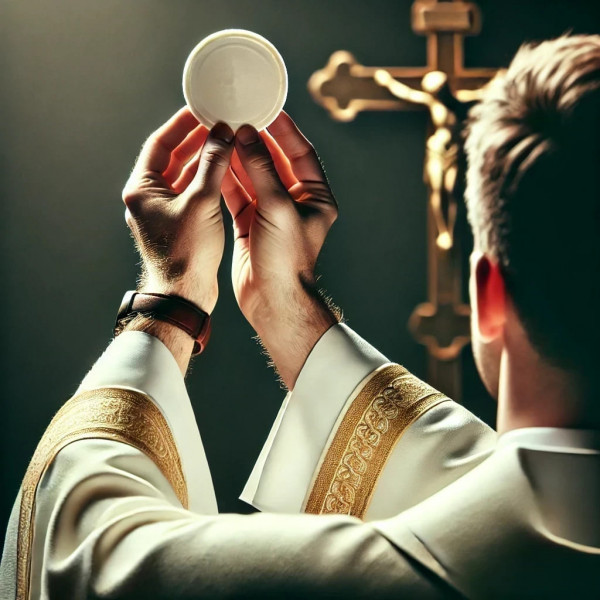
Transubstantiation: The Mystery of Faith
In the Eucharist, bread and wine become the Body and Blood of Christ through transubstantiation, performed by the priest's consecration. Although the physical characteristics remain, Christ is present in Body, Blood, Soul, and Divinity (CIC 1413).
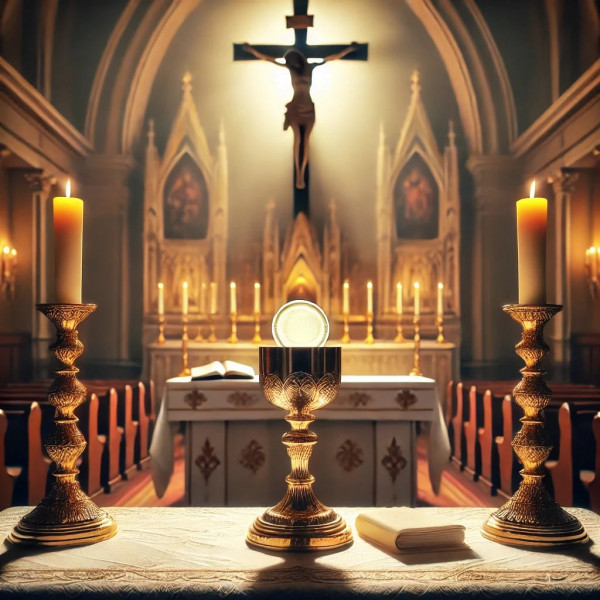
The Unique and Perpetual Sacrifice of Christ
The Eucharist makes Christ's unique and unrepeatable sacrifice present, as taught in Hebrews (7:27; 9:26). In each Mass, we enter the mystery of redemption, where Christ's sacrifice is made present without being repeated.
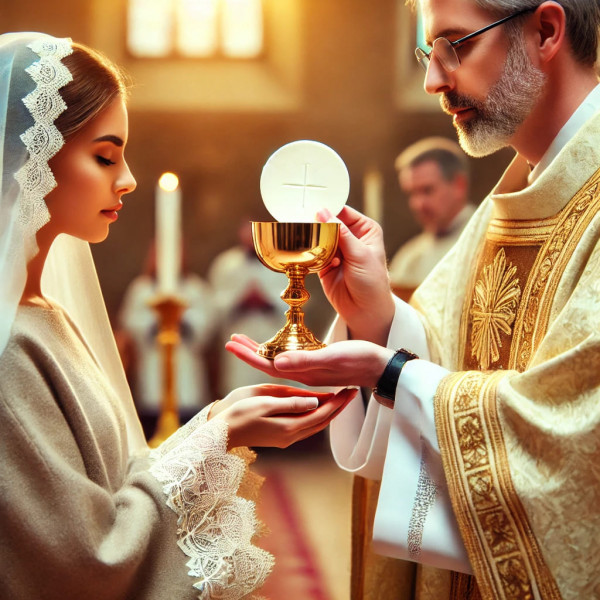
Communion and Preparation for the Body of Christ
In receiving Communion, we unite with Christ and renew our covenant with God (1Corinthians 11:25). St. Paul teaches that we must be in a state of grace, for whoever communes unworthily "eats and drinks judgment upon themselves" (1Corinthians 11:27-29).
References
Cited sources
Related questions
Submission note to the Catholic Church
The answers here aim to clarify doubts about the Catholic faith. While every effort is made to ensure conformity with the Church's teachings, we recognize that interpretation errors can occur. If you identify any content at odds with the magisterium, please let us know — we will review and correct promptly.