

Short answer
Christ's sacrifice on the cross becomes present in an unbloody manner in the Mass and is not a repetition.
Full answer
The Mass is the center of Christian life because in it, Christ’s unique sacrifice becomes present in an unbloody manner, perpetuating His redemptive offering on the cross. As taught by the Catechism of the Catholic Church (CCC 1366), the Eucharist represents the sacrifice of the cross as its memorial. It applies the fruits of this sacrifice, such as the remission of sins. Christ offered Himself once for all (Hebrews 7:27; 9:26; 10:10) and in the Mass, this unique offering is made present, not as a repetition but as a sacramental re-presentation (1 Corinthians 11:24-25; Luke 22:19-20; Hebrews 9:14).
The Catechism (CCC 1367) teaches that Christ’s sacrifice and the Eucharist are not two distinct sacrifices, but constitute a single act: "it is the same victim who offers." In the Mass, the Church participates in this sacrifice, offering itself with Christ. As St. Paul says, the lives of the faithful, their sufferings, and their prayers unite with Christ’s sacrifice (Colossians 1:24; Romans 12:1). When we participate in the Eucharist, we unite ourselves to Christ’s offering as one body (1 Corinthians 10:16-17).
Christ’s offering, which obtained eternal redemption for us (Hebrews 9:12), is perpetuated in the Mass (CCC 1368), allowing Christians to unite with this offering. The Eucharist is thus a propitiatory sacrifice (Isaiah 53:5; Matthew 26:28), applying to all the faithful the grace of redemption accomplished once for all by Christ. The Mass is not a repetition but the living presence of Christ’s sacrifice, renewed in the liturgy for the salvation of all generations.
Visual aid
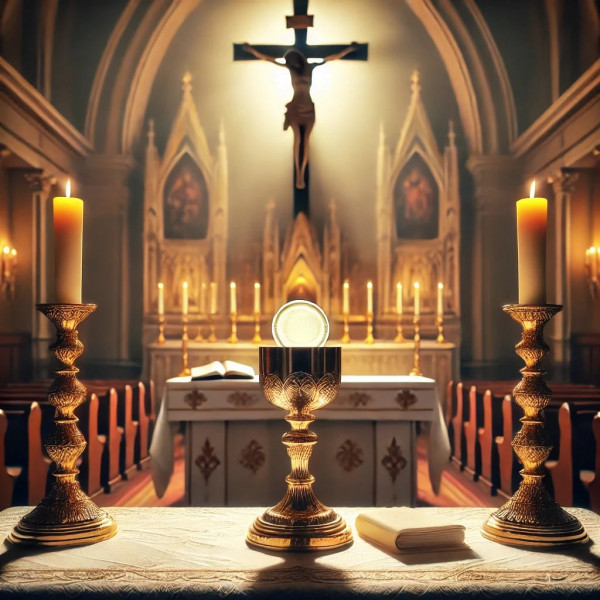
The Mass: Re-presentation of Christ’s Sacrifice
The Mass is the center of Christian life, as in it the unique sacrifice of Christ on the cross becomes present. According to the Catechism (CCC 1366), the Eucharist is the memorial of this sacrifice, applying its redemptive fruits, such as the remission of sins. In the Mass, Christ's offering is re-presented, not repeated, becoming a present event for the salvation of all.
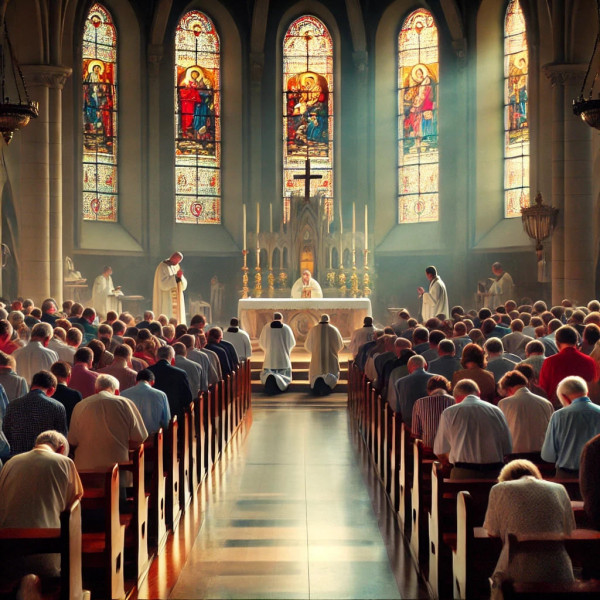
Faithful Participation in Christ’s Sacrifice
The Catechism (CCC 1367) teaches that Christ’s sacrifice and that of the Eucharist are one and the same. In the Mass, the faithful unite their lives, prayers, and sufferings to Christ's offering, participating in this act of redemption (Colossians 1:24; Romans 12:1). Thus, the Eucharist perpetuates Christ’s offering and applies the grace of redemption to the faithful, renewing Christ’s presence for all generations.
References
Cited sources
Related questions
Submission note to the Catholic Church
The answers here aim to clarify doubts about the Catholic faith. While every effort is made to ensure conformity with the Church's teachings, we recognize that interpretation errors can occur. If you identify any content at odds with the magisterium, please let us know — we will review and correct promptly.