

Short answer
The weekly Easter on Sunday reflects Christ’s victory over sin, something that Saturday prefigured.
Full answer
The Catholic teaching on Sunday observance instead of Saturday is based on Scripture and apostolic tradition, showing that Sunday is the central day of Christian worship, especially as it is the day of Jesus' resurrection.
- Mark 16:2: This verse states that Jesus rose "on the first day of the week," or Sunday. This marks the beginning of a new creation, surpassing the old covenant and Saturday. The Church celebrates Sunday as the day of Christ’s victory over death.
- John 20:19: On the day of the resurrection, Jesus appears to the disciples gathered together. This event reinforces the importance of Sunday as the day the Lord reveals Himself to His followers, giving them peace and strengthening their faith.
- John 20:26: Eight days later, again a Sunday, Jesus appears to the disciples and confirms Thomas’s faith. This eight-day cycle shows that Sunday became the regular meeting day with the Risen One, no longer Saturday.
- Acts 20:7: In this verse, the early Christians meet on Sunday to “break bread,” a reference to the celebration of the Eucharist. This practice of gathering on Sunday for worship was already established among Christ’s followers, distinguishing them from the Jewish Saturday worship.
- 1 Corinthians 16:2: The apostle Paul instructs Christian communities to collect their offerings on the first day of the week, Sunday. This detail shows how Sunday was already a special day for Christians, not only for the Eucharist but also for other aspects of community life.
- Revelation 1:10: John says he had a vision “on the Lord’s Day,” which refers to Sunday. This verse confirms that Sunday was already known among the first Christians as a day set apart for worship and for deep spiritual experiences.
- Colossians 2:16-17: Paul argues that Christians should not be judged for not observing Saturday. He explains that the practices of the Old Law, like Sabbath observance, were “shadows” of what would be fulfilled in Christ. With the Resurrection, Saturday lost its ceremonial meaning.
- Galatians 4:9-11: Paul warns the Galatians against returning to Jewish Law observances, including keeping Saturday. He teaches that these practices were preparatory for Christ’s coming, and now, with the New Covenant, they are no longer necessary.
Therefore, based on these verses and Church tradition, Sunday became the Christian worship day, the "Day of the Lord," celebrating Jesus' resurrection and ushering in the new creation. The change from Saturday to Sunday reflects the fulfillment of God's promises in Christ and the centrality of the Resurrection in Christian faith.
Visual aid
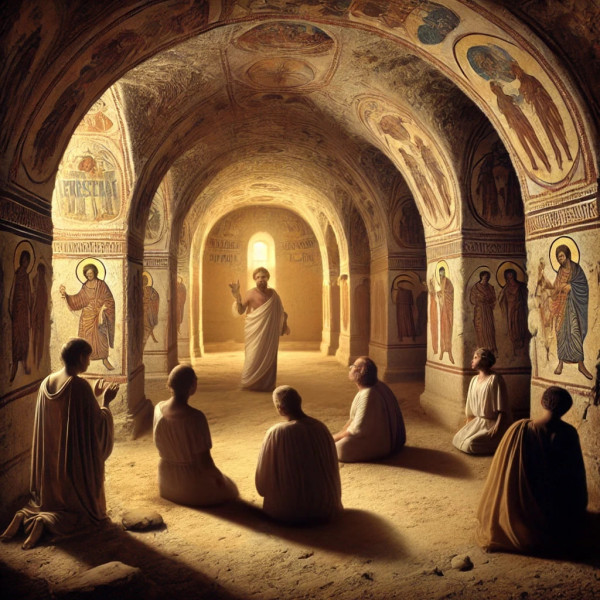
From Saturday to Sunday: The New Covenant and the Lord's Day
The Catholic Church celebrates Sunday as the "Lord’s Day," drawing on the practice of early Christians who, inspired by Christ’s resurrection, began gathering on this day. In Acts 20:7, the apostles "gathered to break bread" on the first day of the week, a clear reference to celebrating the Eucharist on Sunday. Also, in 1 Corinthians 16:2, Paul instructs the community to gather offerings on Sunday, showing that this day was already significant among Christians. This custom reflects the new creation inaugurated by the resurrection and the transition from Saturday to Sunday, the day Christ conquered death and established the New Covenant.
Related questions
Submission note to the Catholic Church
The answers here aim to clarify doubts about the Catholic faith. While every effort is made to ensure conformity with the Church's teachings, we recognize that interpretation errors can occur. If you identify any content at odds with the magisterium, please let us know — we will review and correct promptly.