

Short answer
The doctrine of the Immaculate Conception states that Mary was conceived without original sin, preserved by God from the beginning of her existence
Full answer
The doctrine of the Immaculate Conception states that the Virgin Mary was preserved from original sin from the moment of her conception. Officially proclaimed by Pope Pius IX in 1854, the dogma teaches that Mary, "full of grace" (Luke 1:28), was uniquely redeemed by the merits of Jesus Christ.
An important point in this doctrine is the use of the Greek term "Kecharitomene" in the Gospel of Luke. In the greeting of the angel Gabriel, he addresses Mary saying, "Hail, full of grace" (Luke 1:28). The term "Kecharitomene" means "completely graced" or "fully favored" and, in the verbal form used, indicates a complete and continuous action. This implies that Mary was graced by God from the beginning of her existence, remaining in that grace until the moment of the angel's greeting. This title is unique in the Scriptures, being used only for Mary, which points to her special condition and her preservation from original sin.
The Church Fathers also contributed to this understanding. Justin Martyr and Saint Irenaeus developed the typology of Mary as the "new Eve." Just as Eve was created without sin but chose to disobey, Mary was conceived without sin and remained faithful to God. Saint Augustine, when debating original sin in the 4th century, stated that all, except the Virgin Mary, were subject to original sin, recognizing the special holiness that Mary possessed from her conception.
The Catechism of the Catholic Church confirms that Mary was preserved "with regard to the merits of Jesus Christ" (CIC 491). This privilege highlights that the Immaculate Conception is not a merit of Mary's own, but a grace given by God in preparation for her role as the Mother of Jesus.
Thus, the doctrine of the Immaculate Conception, supported by Sacred Scripture and the teachings of the Church Fathers, reflects the divine design to prepare Mary for her unique mission in the history of salvation. The exclusive use of "Kecharitomene" for Mary reinforces her singular position as the only one conceived without original sin.
Visual aid
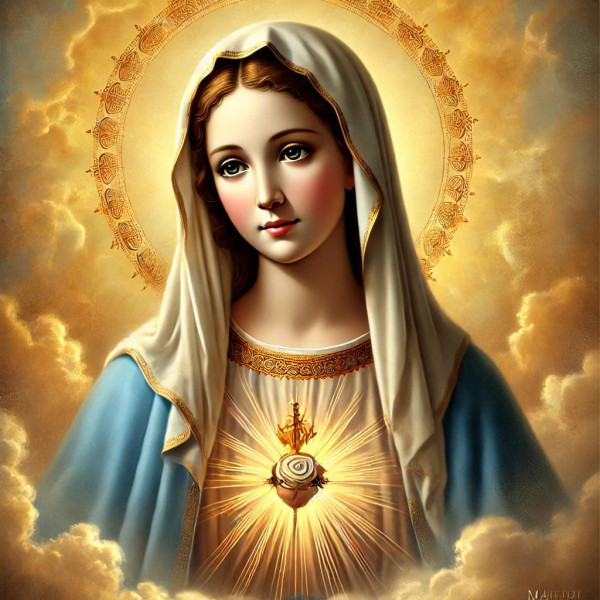
What is the Immaculate Conception?
The Immaculate Conception is the doctrine that affirms that Mary was preserved from original sin from her conception, by a singular grace of God. Proclaimed in 1854, this dogma celebrates Mary as "full of grace" (Luke 1:28), prepared by God to be the Mother of Jesus.
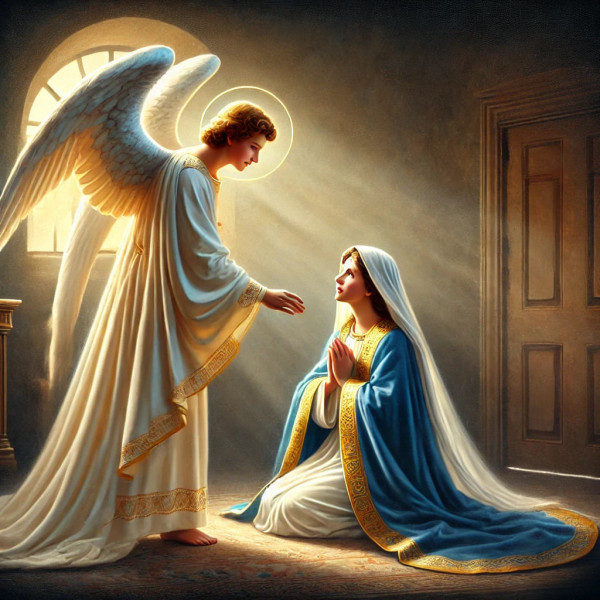
"Kecharitomene": Fully Graced
In the angel's greeting, the term "Kecharitomene" means "fully graced" and indicates that Mary was filled with divine grace from the beginning of her existence. This unique title in the Scriptures reinforces her purity and special mission.
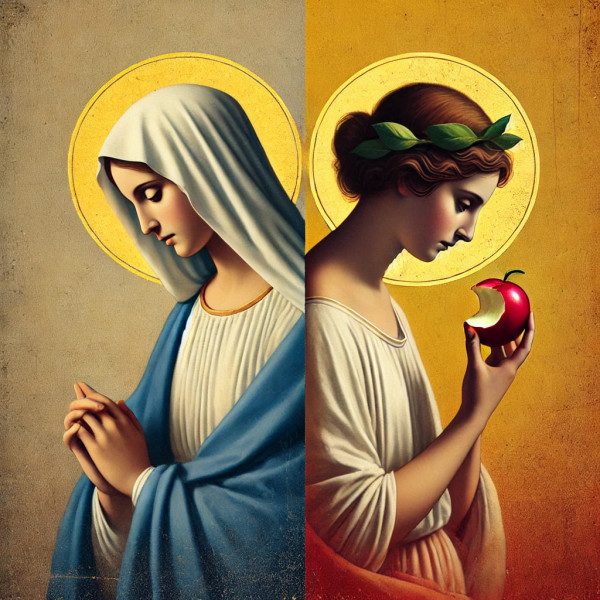
Mary as the "New Eve"
The Church Fathers, such as Saint Irenaeus and Saint Augustine, view Mary as the "New Eve": while Eve disobeyed, Mary was faithful to God, cooperating with the plan of salvation.
References
Cited sources
Related questions
Submission note to the Catholic Church
The answers here aim to clarify doubts about the Catholic faith. While every effort is made to ensure conformity with the Church's teachings, we recognize that interpretation errors can occur. If you identify any content at odds with the magisterium, please let us know — we will review and correct promptly.