

Short answer
Yes, Catholics believe in the real presence of Christ in the Eucharist, where the bread and wine become His Body and Blood.
Full answer
Yes, we Catholics believe in the real presence of Christ in the Eucharist. This belief is one of the pillars of our faith and is expressed in various parts of the Church's tradition. The Eucharist is not merely a symbol but the true presence of Christ, accessible to all the faithful.
The reality that the bread and wine are transformed into the Body and Blood of Christ is called transubstantiation. This is a profound mystery that we accept by faith. During the celebration of the Mass, the priest pronounces the words of Jesus: "This is my body" and "This is my blood," as reported in Luke 22:19-20. This transformation is not perceivable by the senses.
Visual aid
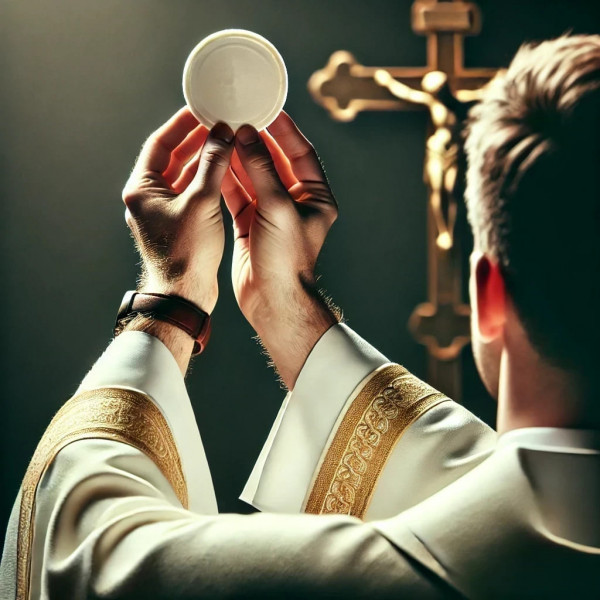
What is the Real Presence of Christ in the Eucharist?
Catholics believe that, in the Eucharist, the bread and wine are transformed into the Body and Blood of Christ, a mystery called transubstantiation. This belief is grounded in Jesus' words: "This is my body... this is my blood" (Luke 22:19-20) and affirmed by the Church's tradition.
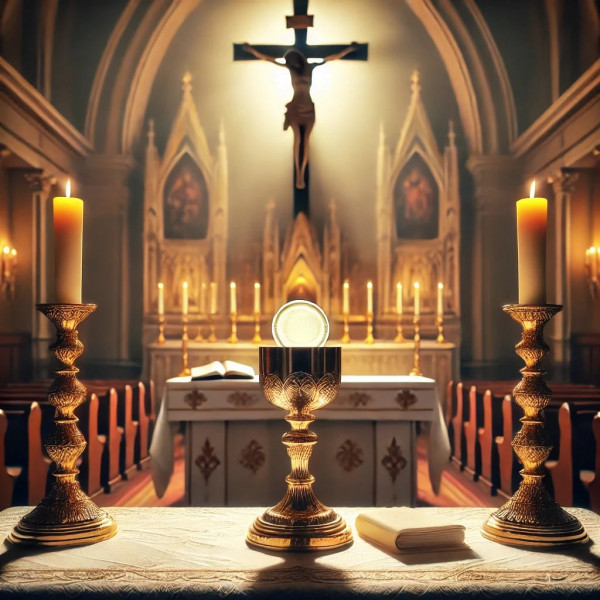
Testimonies of the Early Christians and Church Fathers
Since the early centuries, saints like Ignatius of Antioch and Augustine have affirmed the real presence of Christ in the Eucharist, highlighting the value of this sacrament as spiritual nourishment sustaining the faith. Apostolic tradition preserves this belief in the true nature of the sacrament.
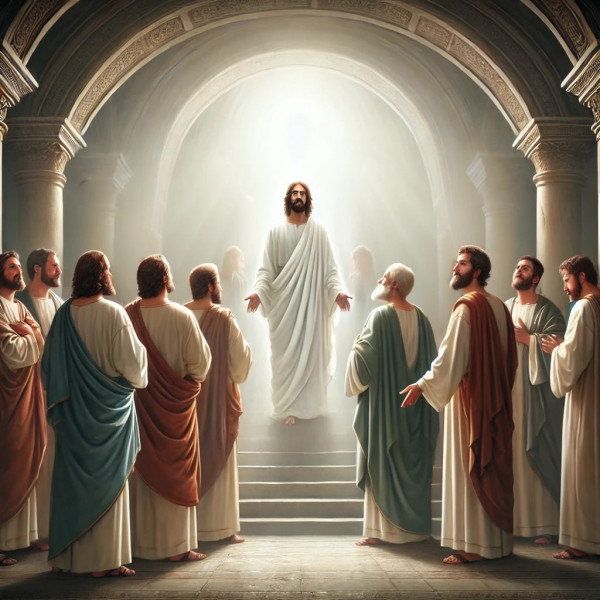
Eucharistic Miracles: Signs of the Real Presence
Miracles such as that of Lanciano reinforce Catholics' faith in the Eucharist. In the 8th century, a priest witnessed the transformation of the bread and wine into flesh and blood during the Mass, a tangible proof of Christ's presence in the sacrament.
References
Cited sources
Related questions
Submission note to the Catholic Church
The answers here aim to clarify doubts about the Catholic faith. While every effort is made to ensure conformity with the Church's teachings, we recognize that interpretation errors can occur. If you identify any content at odds with the magisterium, please let us know — we will review and correct promptly.